Know your material. Choose your finish.
Every material behaves differently under plating, painting, and aging. The right combination defines the look, feel, and durability of your product.
Metals
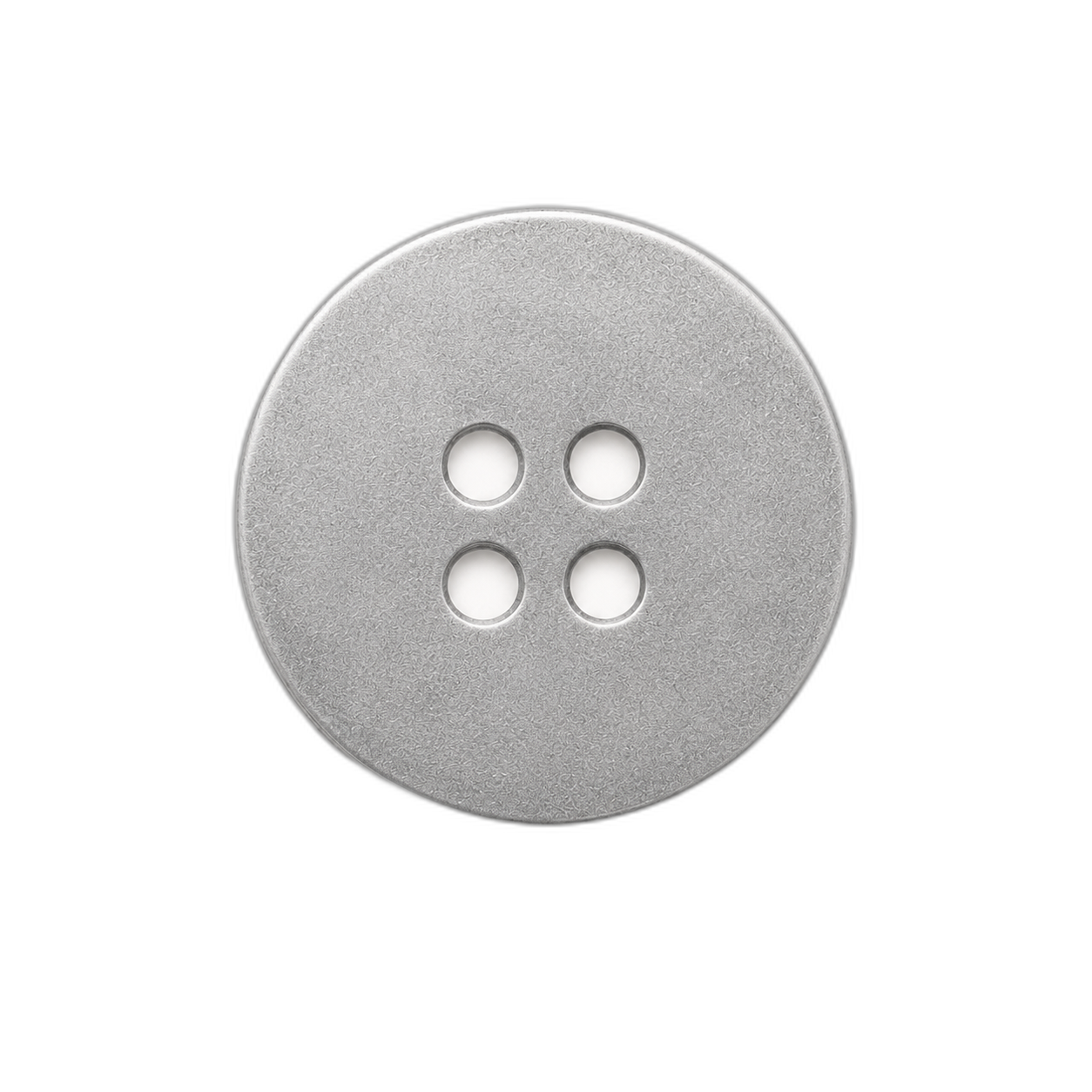
Zinc Alloy
Die-cast. Best for complex 3D shapes, detailed logos, and relief patterns. Supports all plating finishes. Most versatile and cost-effective metal for custom hardware.
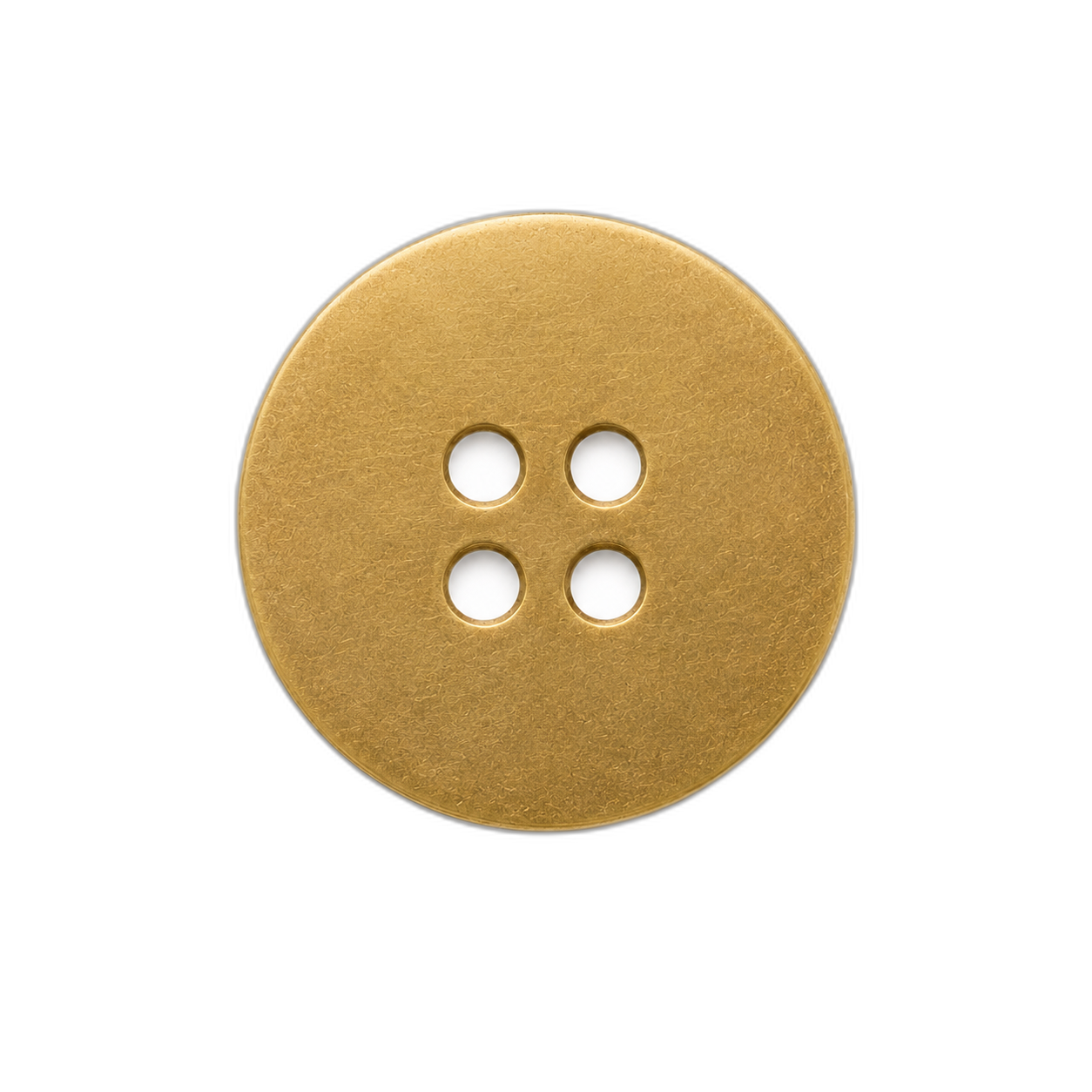
Brass
Stamped or machined. Natural warmth and weight. Excellent for vintage and antique finishes. Ideal for jean buttons, rivets, and heritage-style hardware.
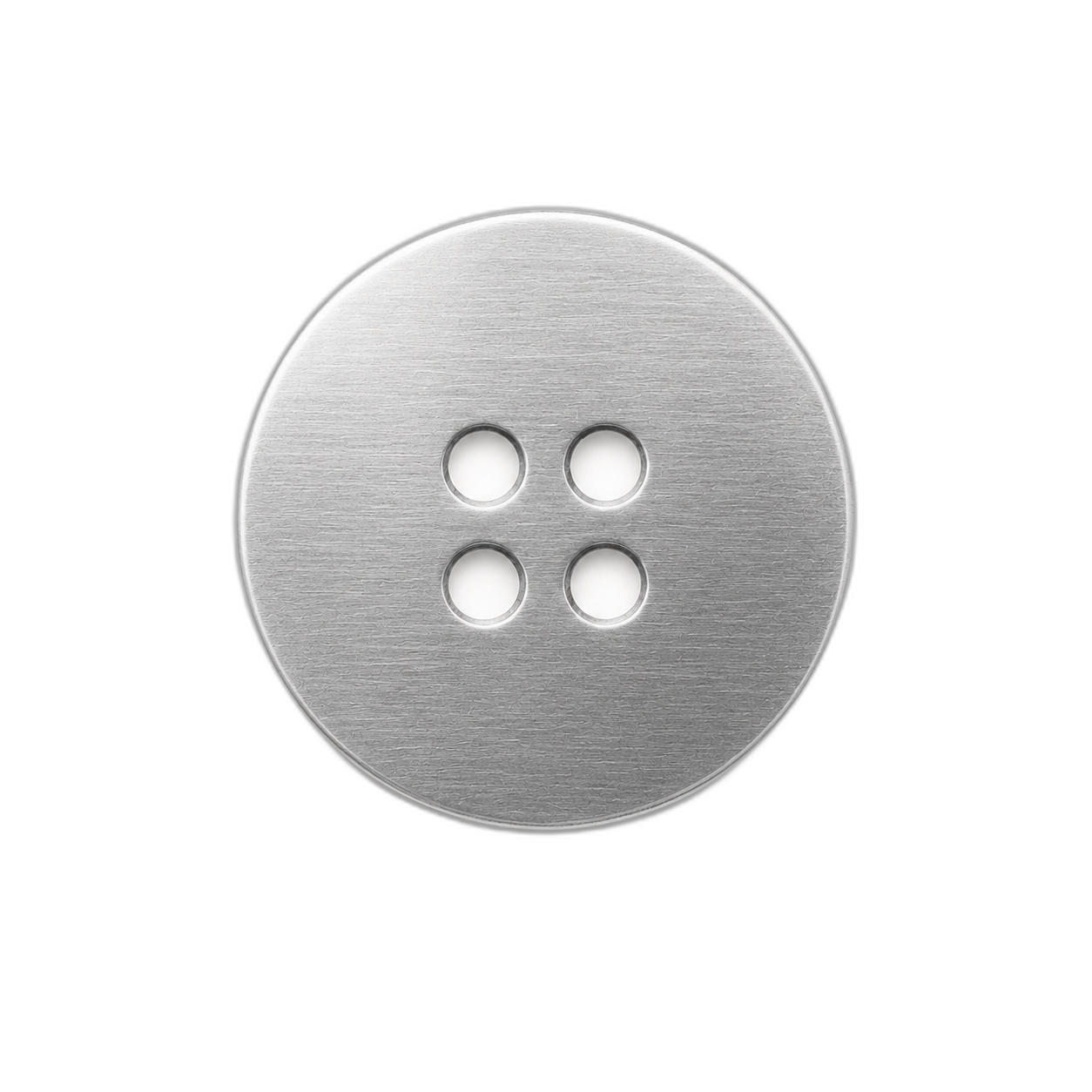
Stainless Steel
Stamped, metal-injection-molded, investment-cast or machined, depending on design. Corrosion-resistant and low in nickel release, though 304 and 316 contain nickel. Ideal for outdoor, workwear, and medical-grade applications.
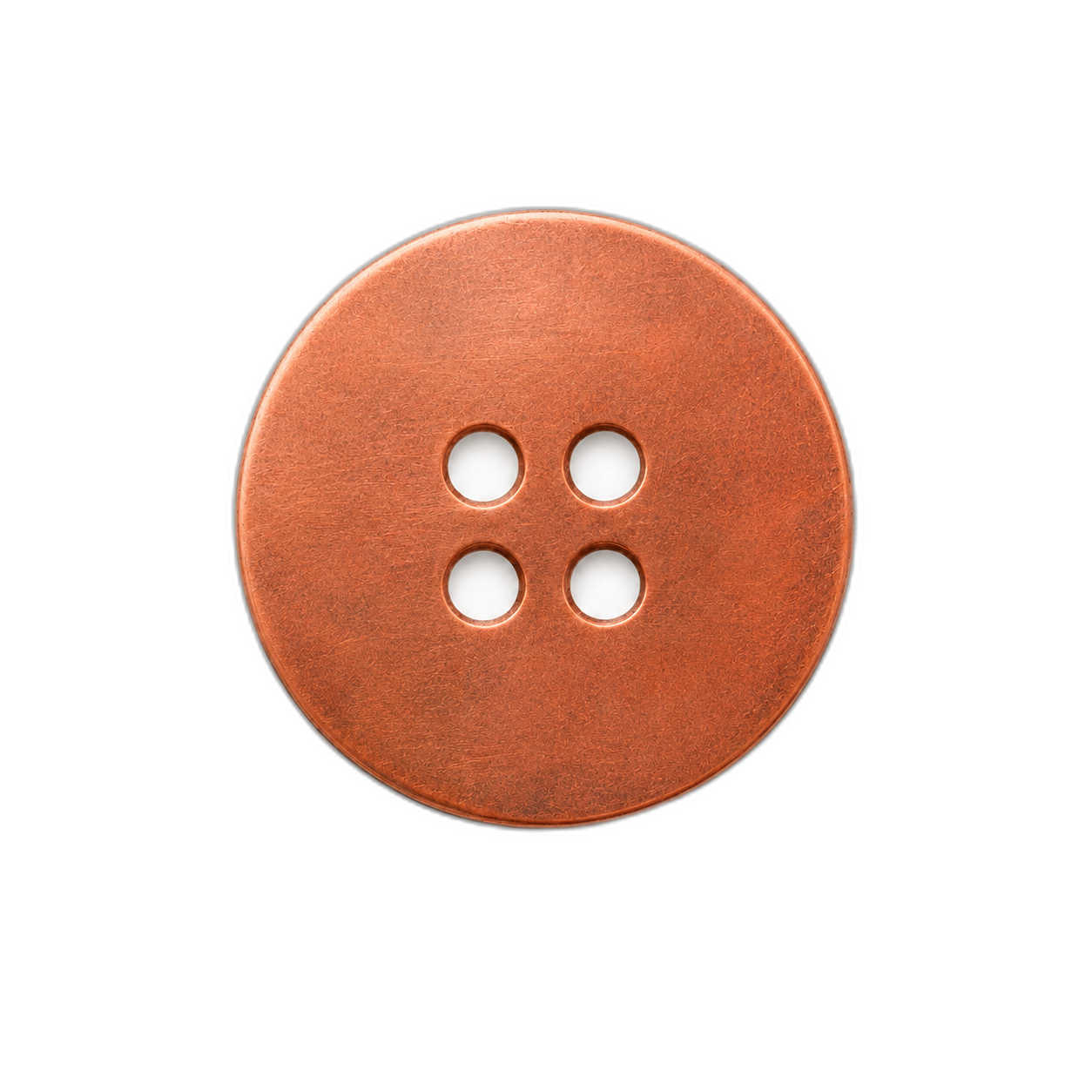
Copper
Develops natural patina over time. Premium feel and visual depth. Suited for heritage brands and luxury lines. Higher material cost, distinctive character.
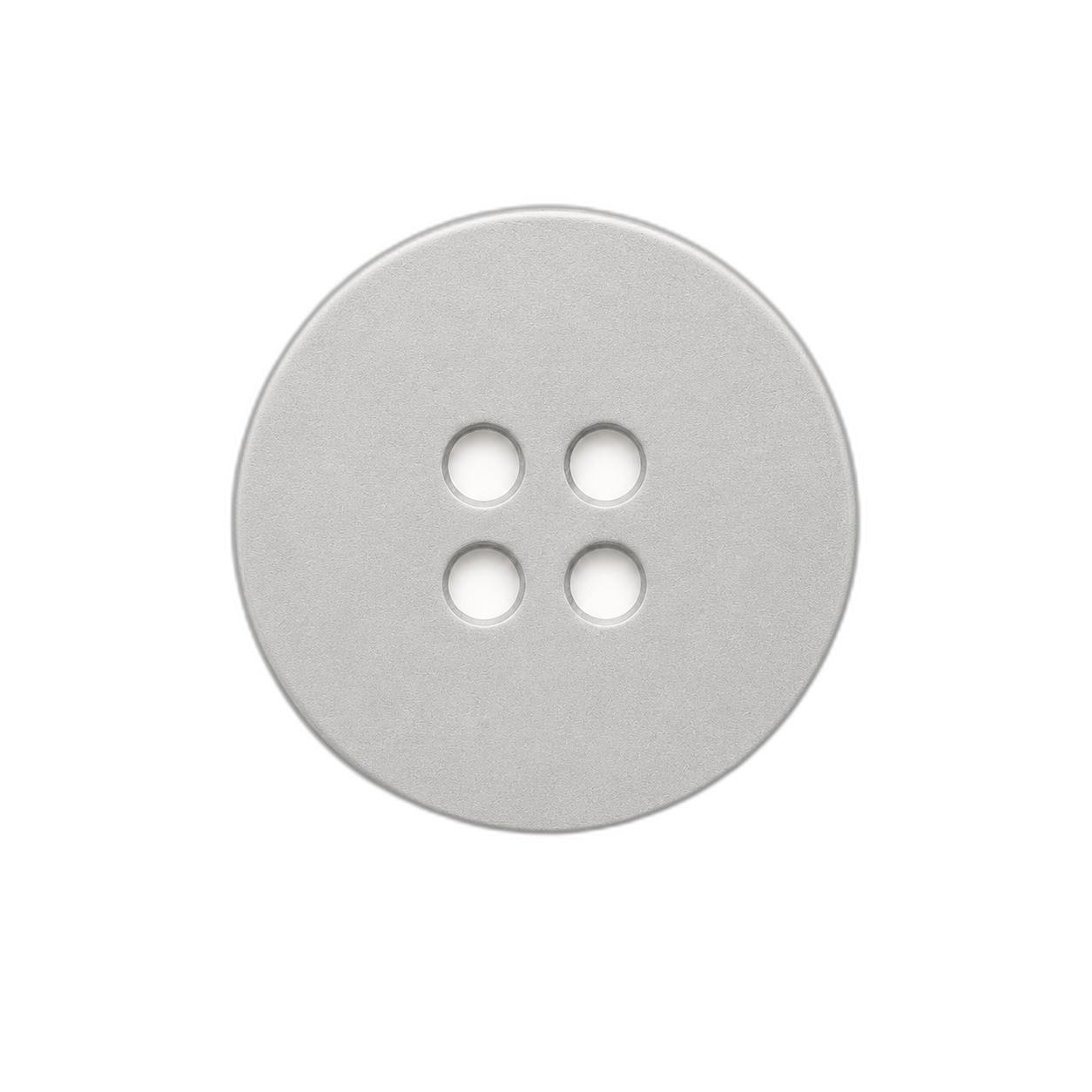
Aluminum
Lightweight and anodizable. Ideal for activewear, sportswear, and applications where weight is critical. Best suited to simpler shapes.
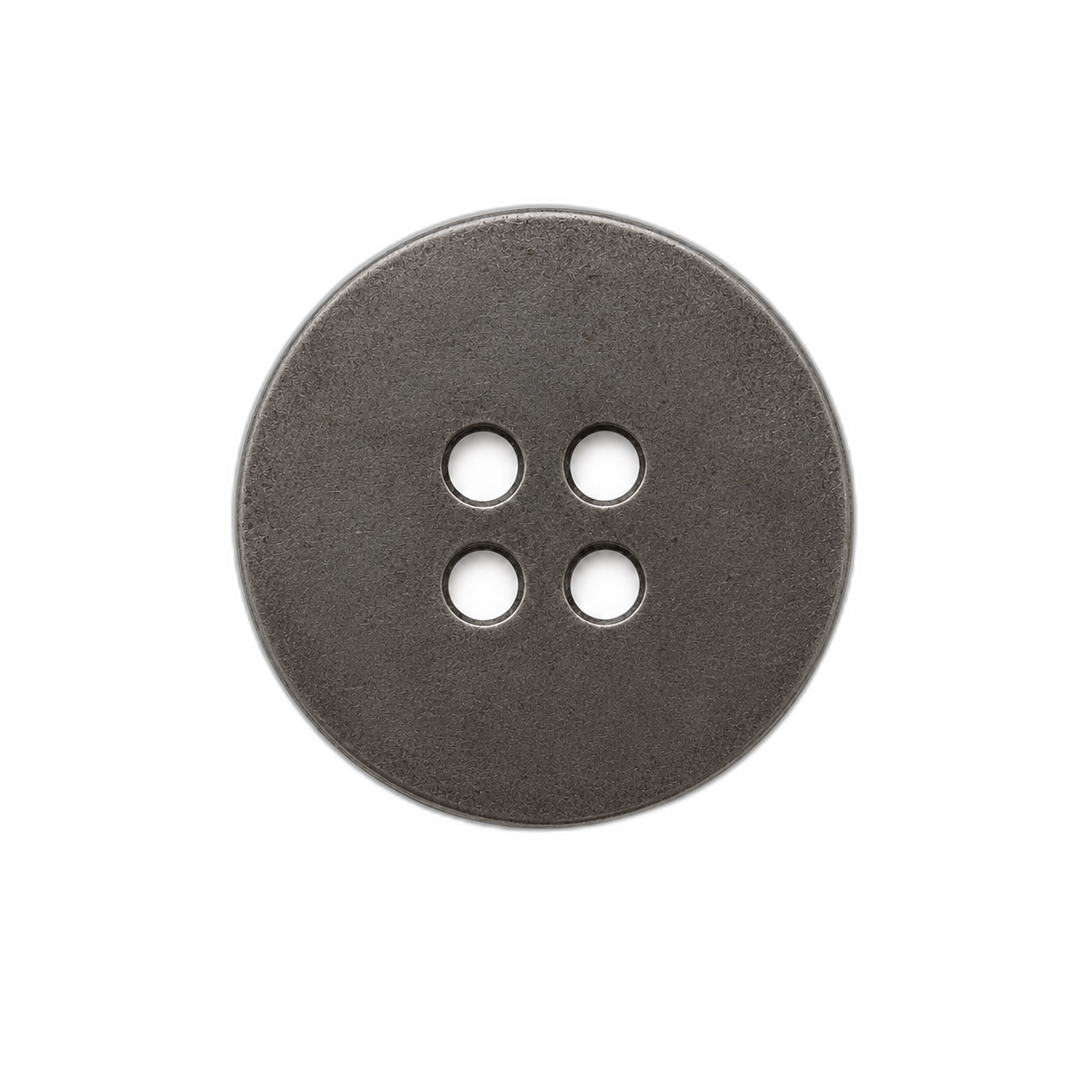
Iron
Heavy and rigid. Used for oversized belt buckles and statement hardware where strength and presence matter.
Resin & Natural Materials
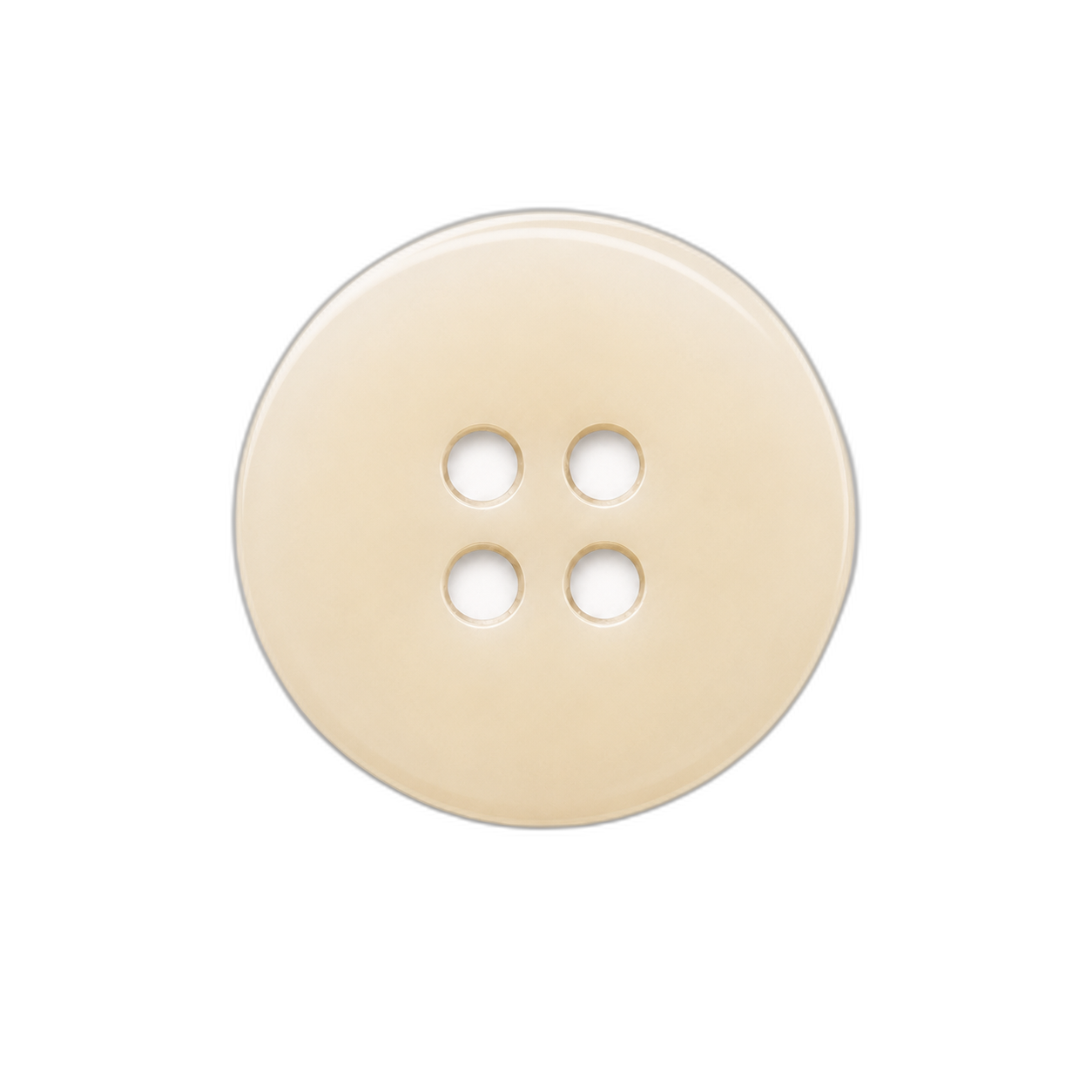
Polyester Resin
Lightweight, colorful, and versatile. Ideal for shirts, casualwear, and fashion buttons. Laser-engraved logos available.
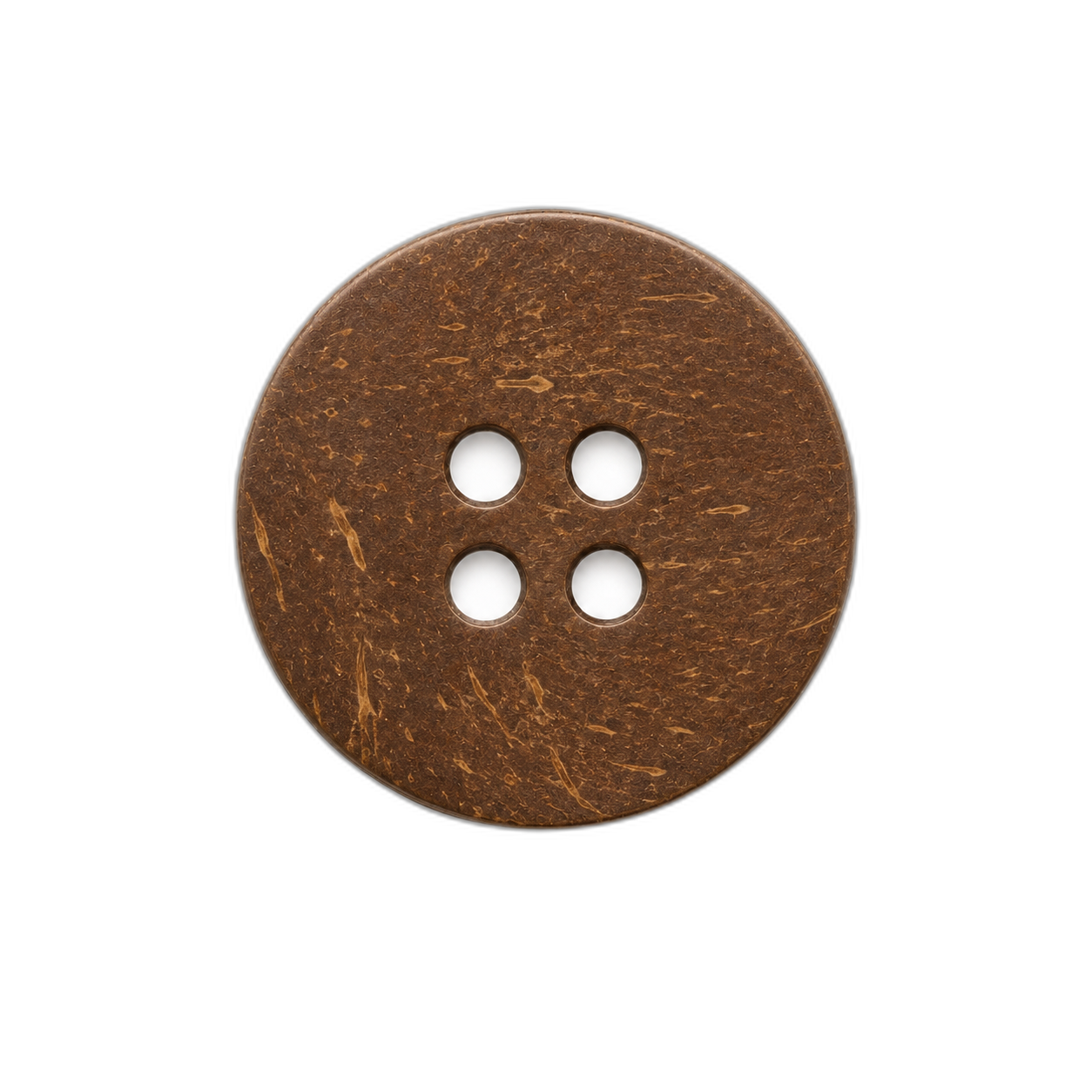
Coconut Shell
Natural, renewable, biodegradable. Warm brown tones with organic texture. Growing demand from eco-conscious brands.
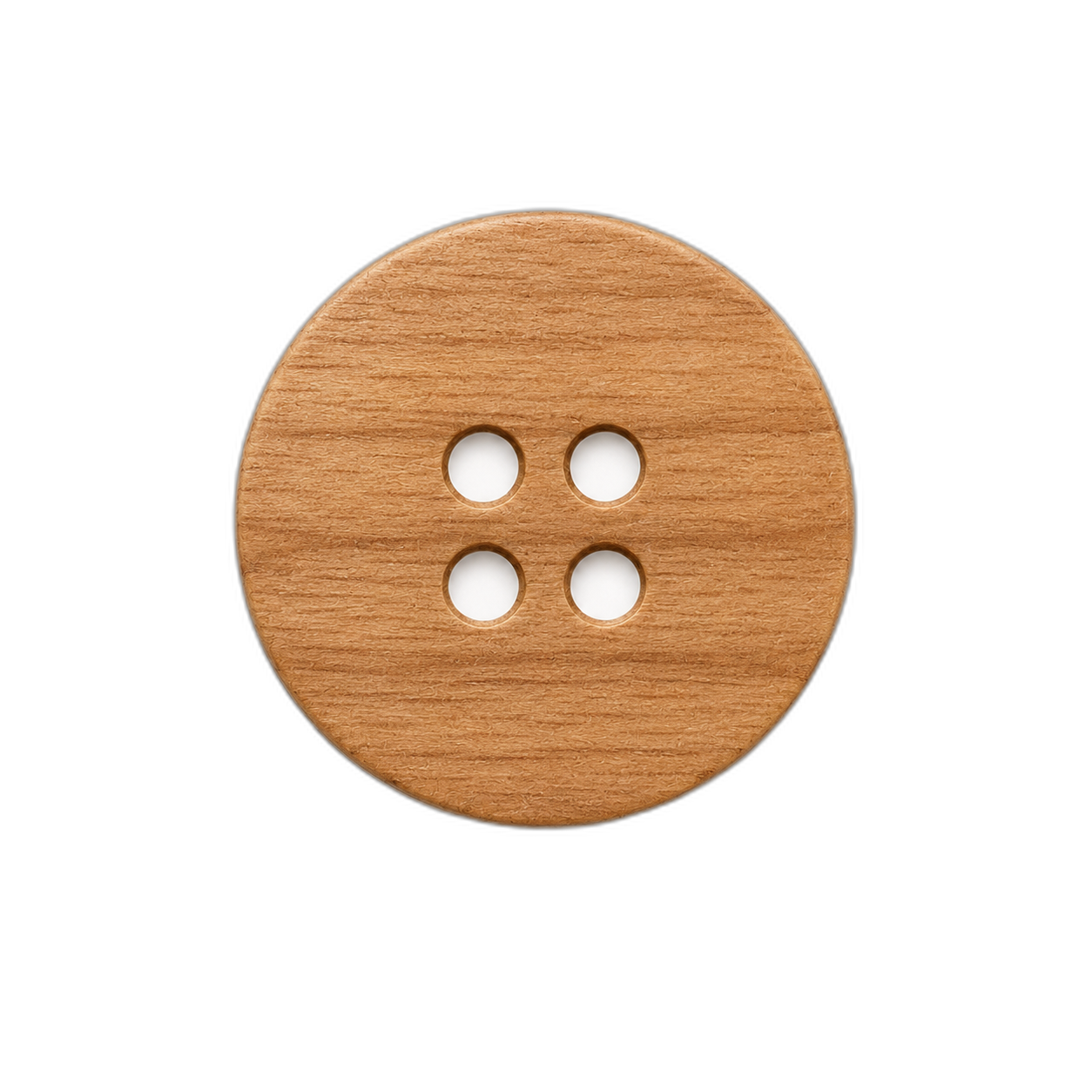
Wood
Lightweight and natural. Available in various wood species. Suitable for casual and artisan brands.
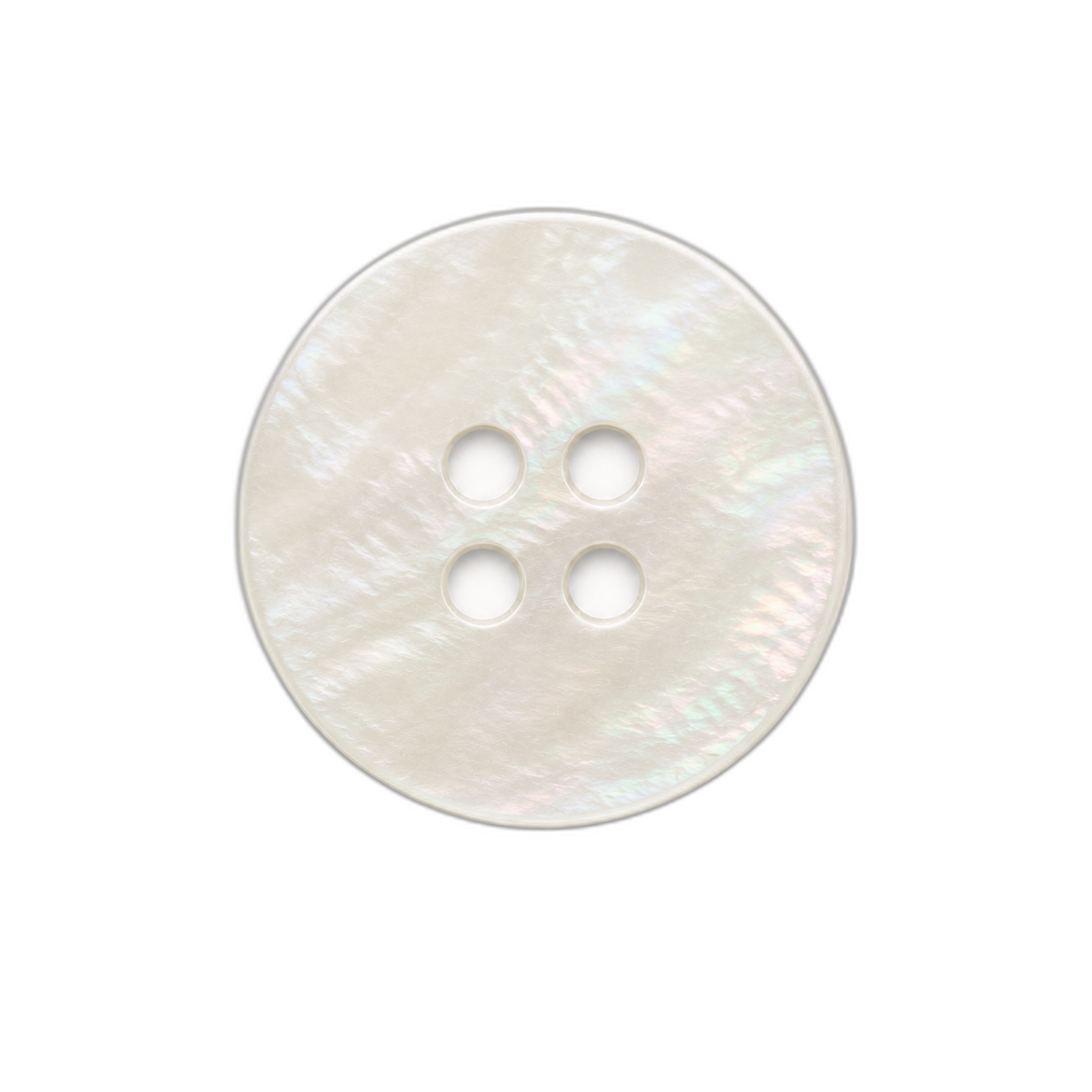
Mother of Pearl (Shell)
Natural iridescence and depth. The benchmark for premium shirting, womenswear, and eveningwear. River shell, trocas, and agoya available.
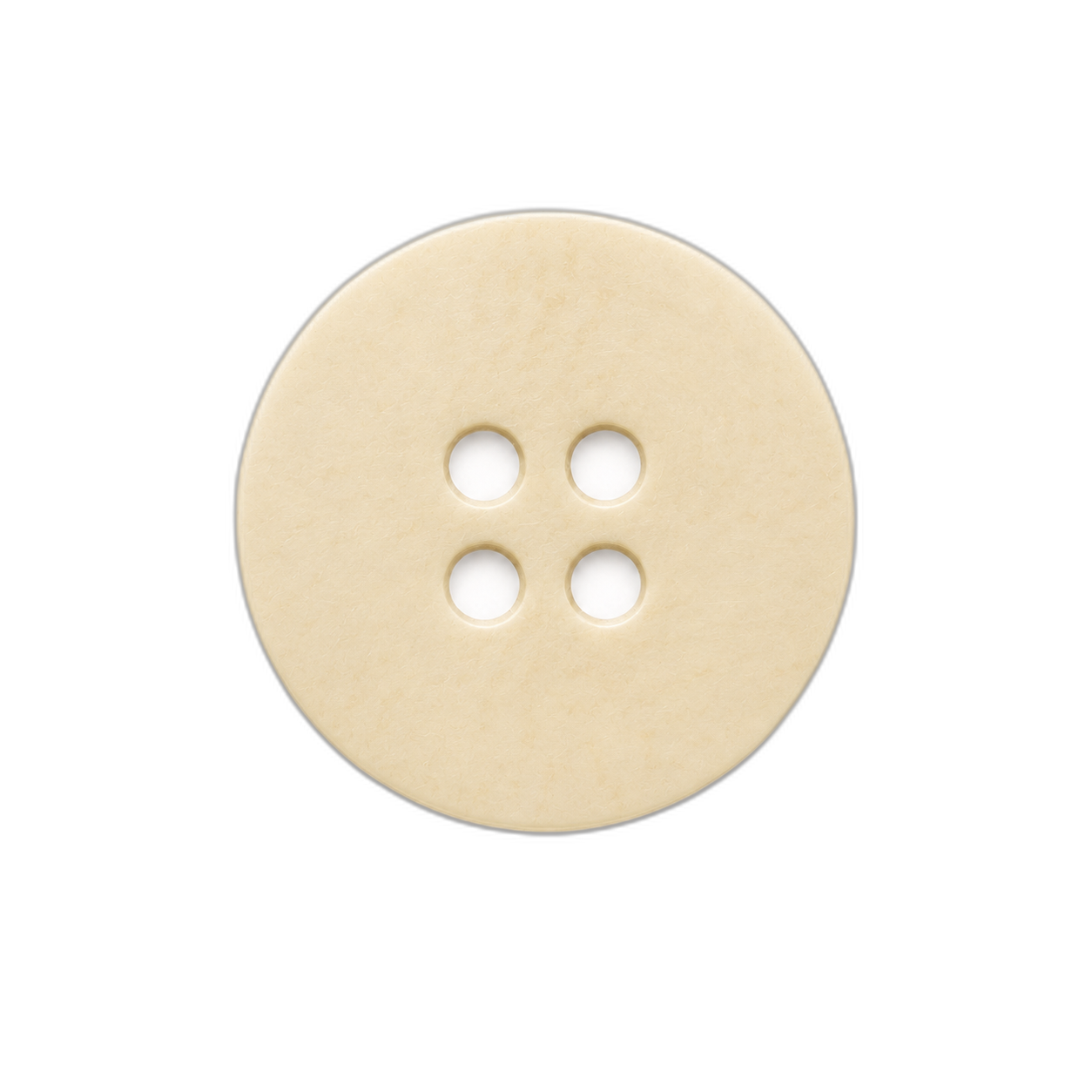
Corozo (Tagua Nut)
Plant-based “vegetable ivory.” Takes dye beautifully and is fully biodegradable. Favored by premium menswear and sustainable brands.
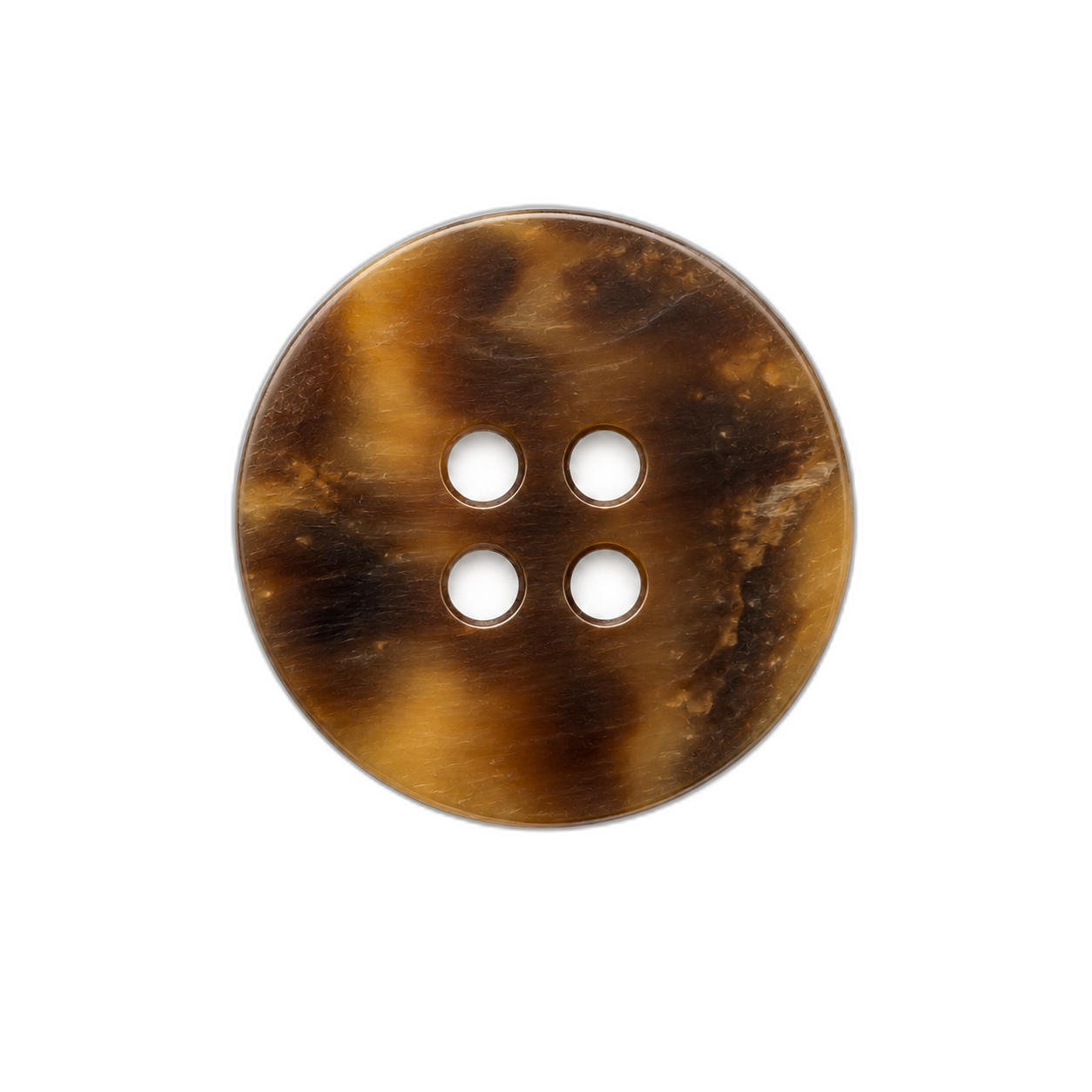
Buffalo Horn
Warm, organic, and individually unique. A heritage standard for tailored jackets, coats, and luxury menswear.
Finishes
Each finish changes the look, feel, and durability of the base metal. We match your exact spec with physical samples before production.
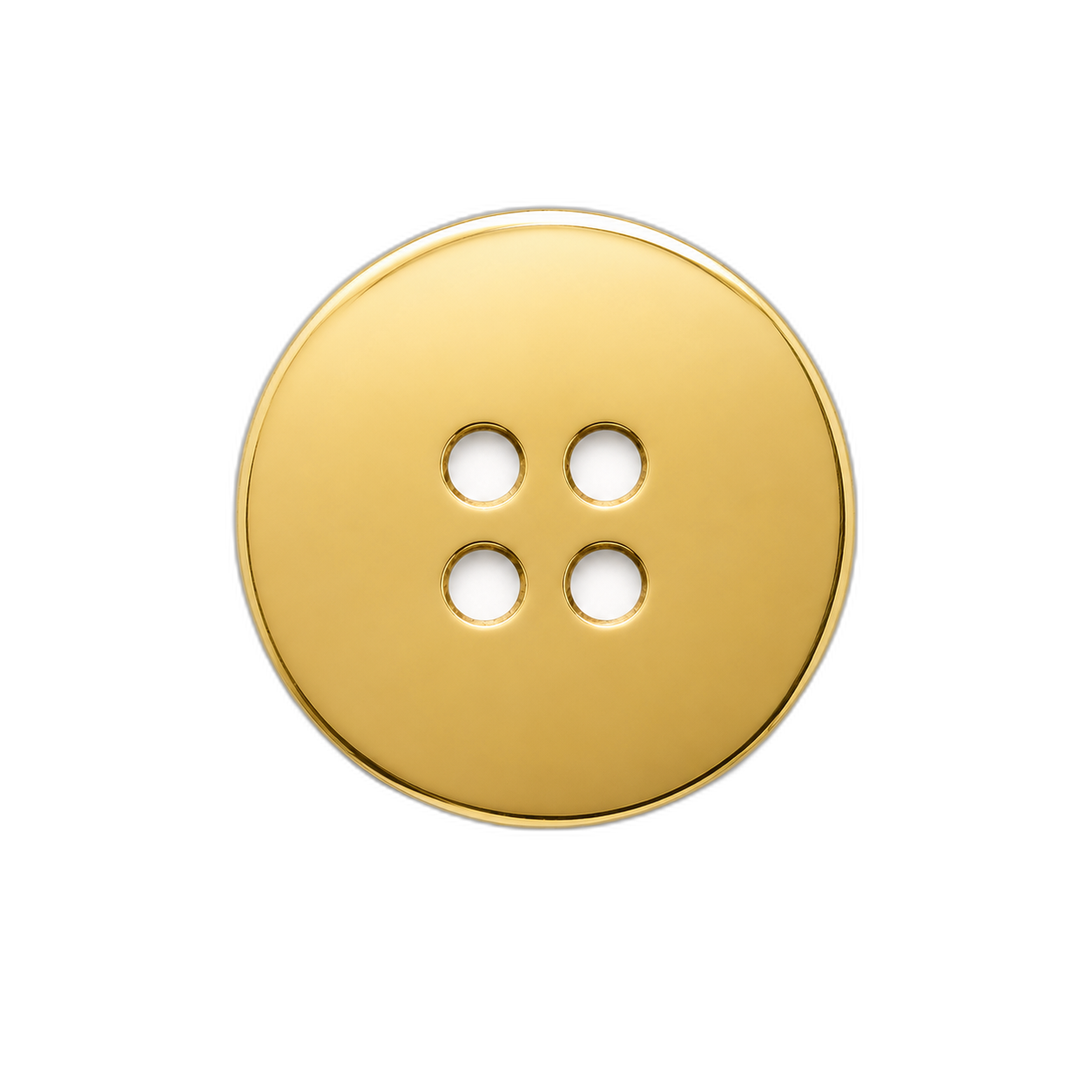
Electroplating
Gold, silver, nickel, gun-metal, rose gold, chrome. High gloss or matte. Standard durability for most applications.
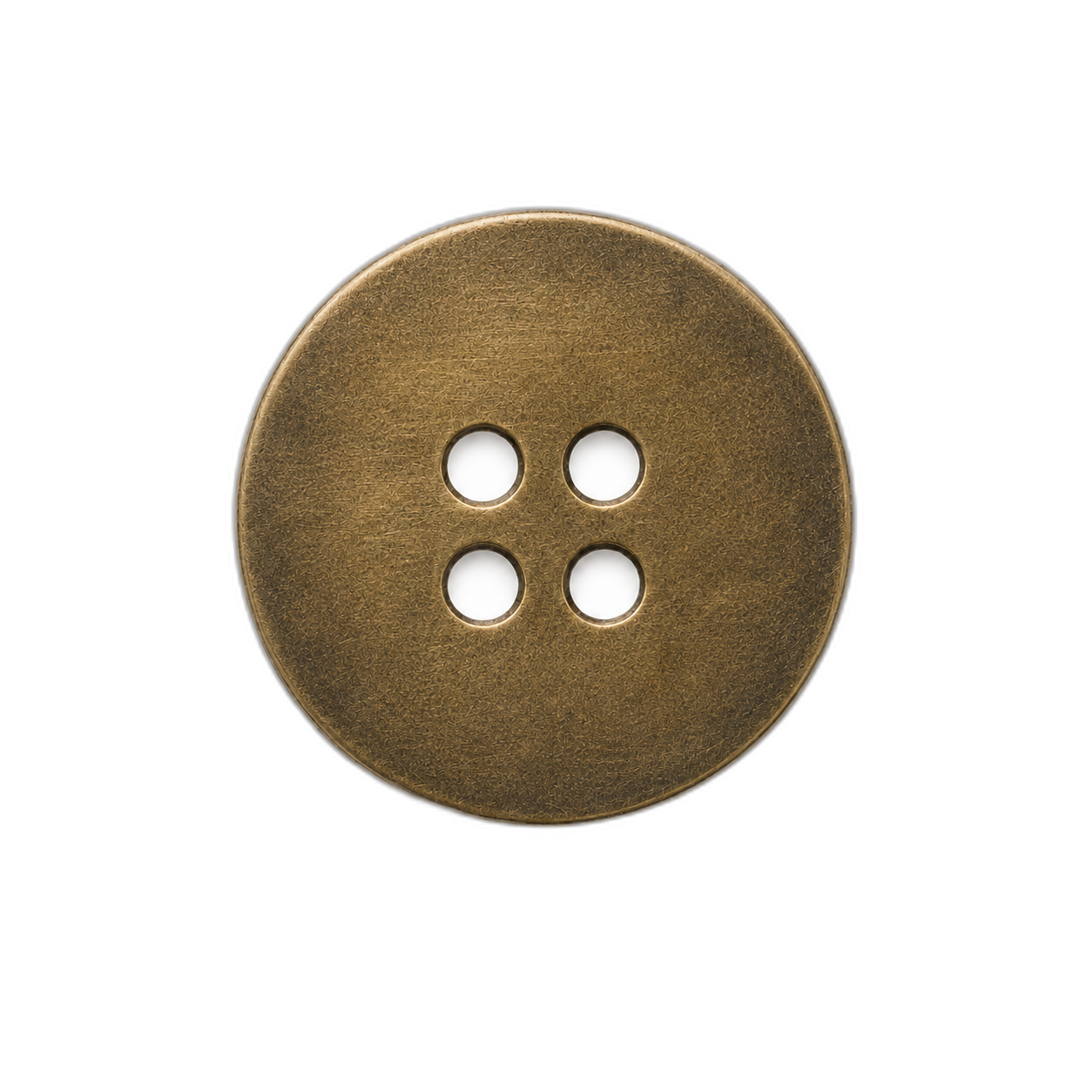
Antique / Vintage Wash
Chemical aging process that creates depth and character. Antique brass, antique copper, antique silver, and custom tones.
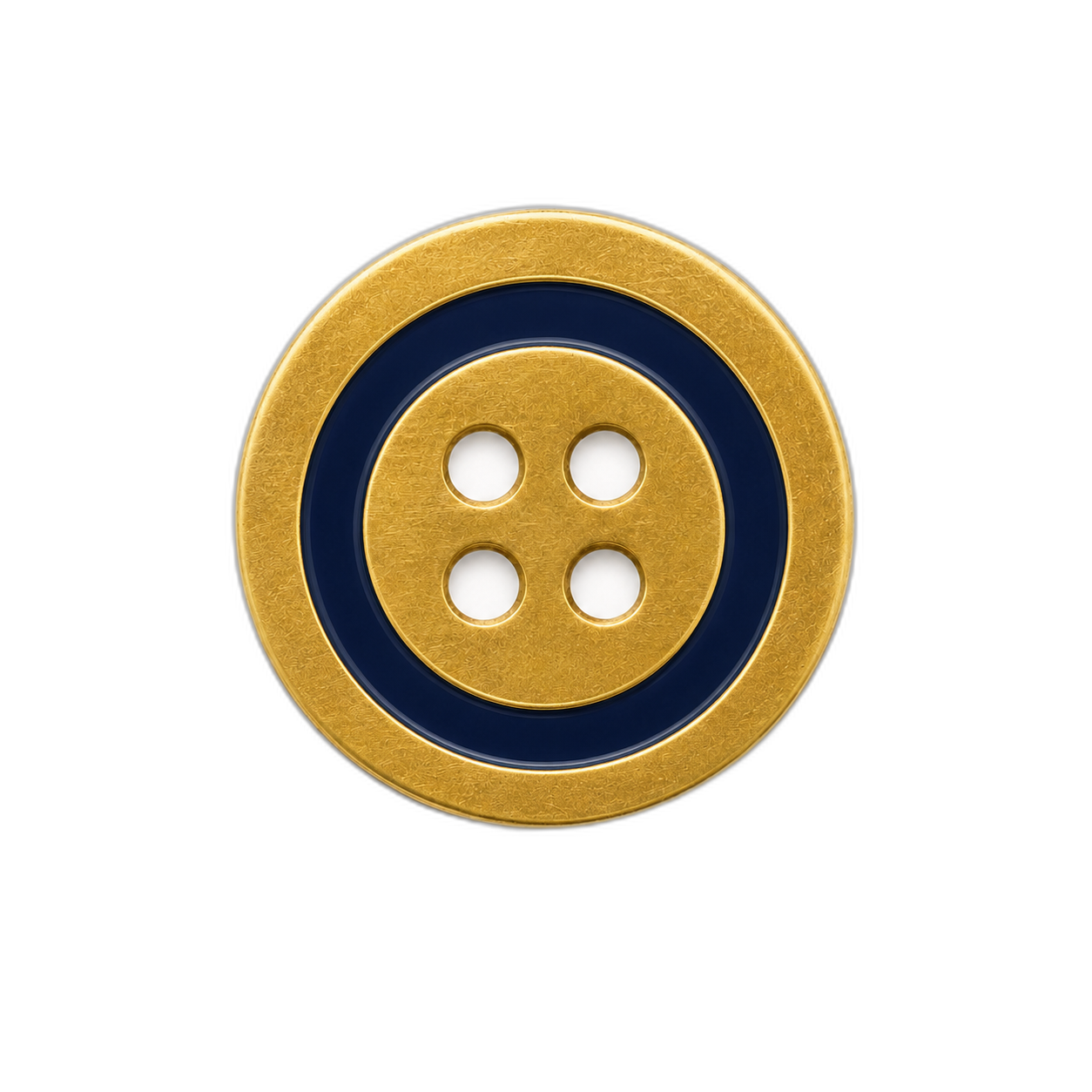
Enamel Fill
Color-filled recessed areas for multi-tone designs. Soft or hard enamel. Pantone color matching available.
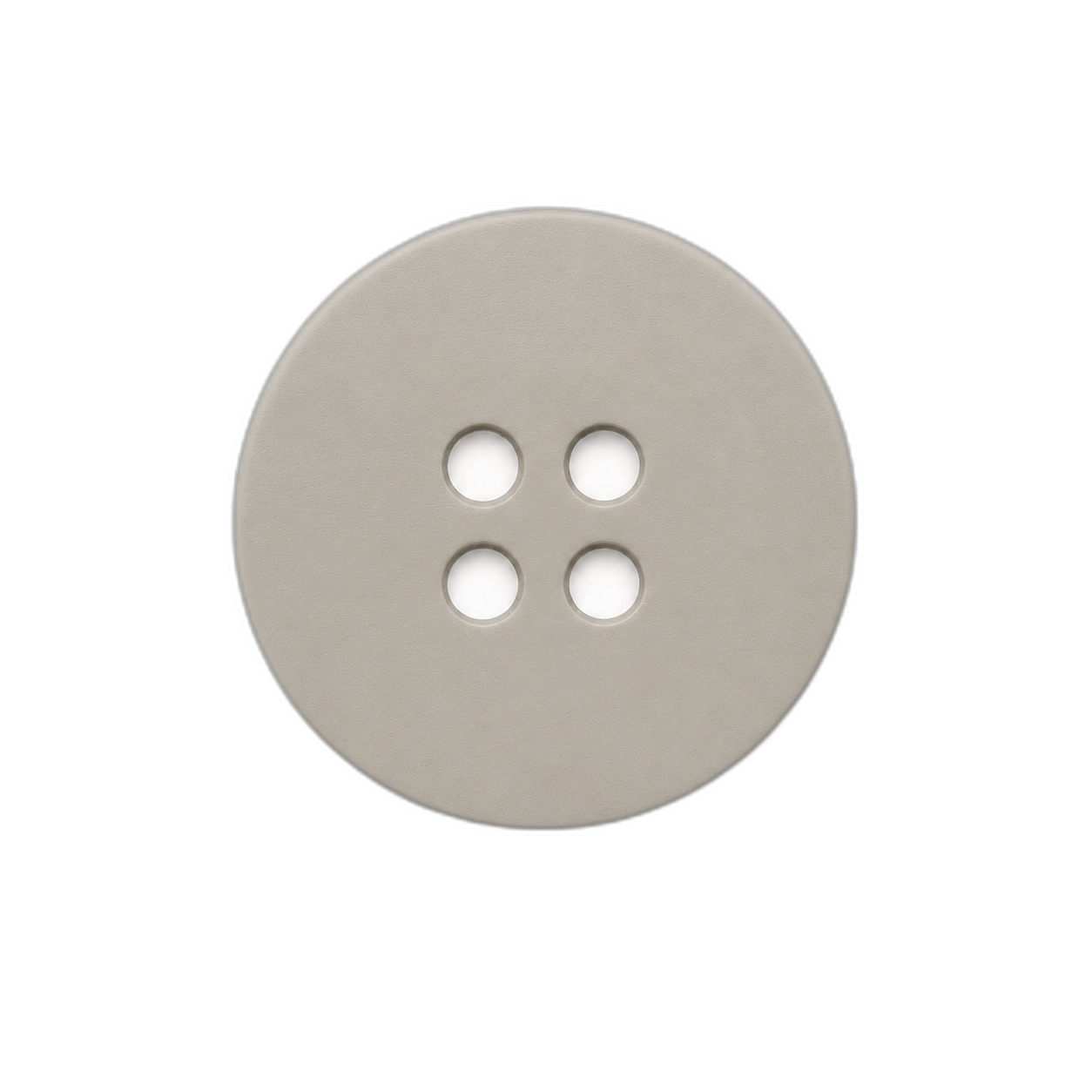
Spray Paint / Lacquer
Custom colors, matte or gloss. UV-resistant options for outdoor applications. Can be combined with plating for two-tone effects.
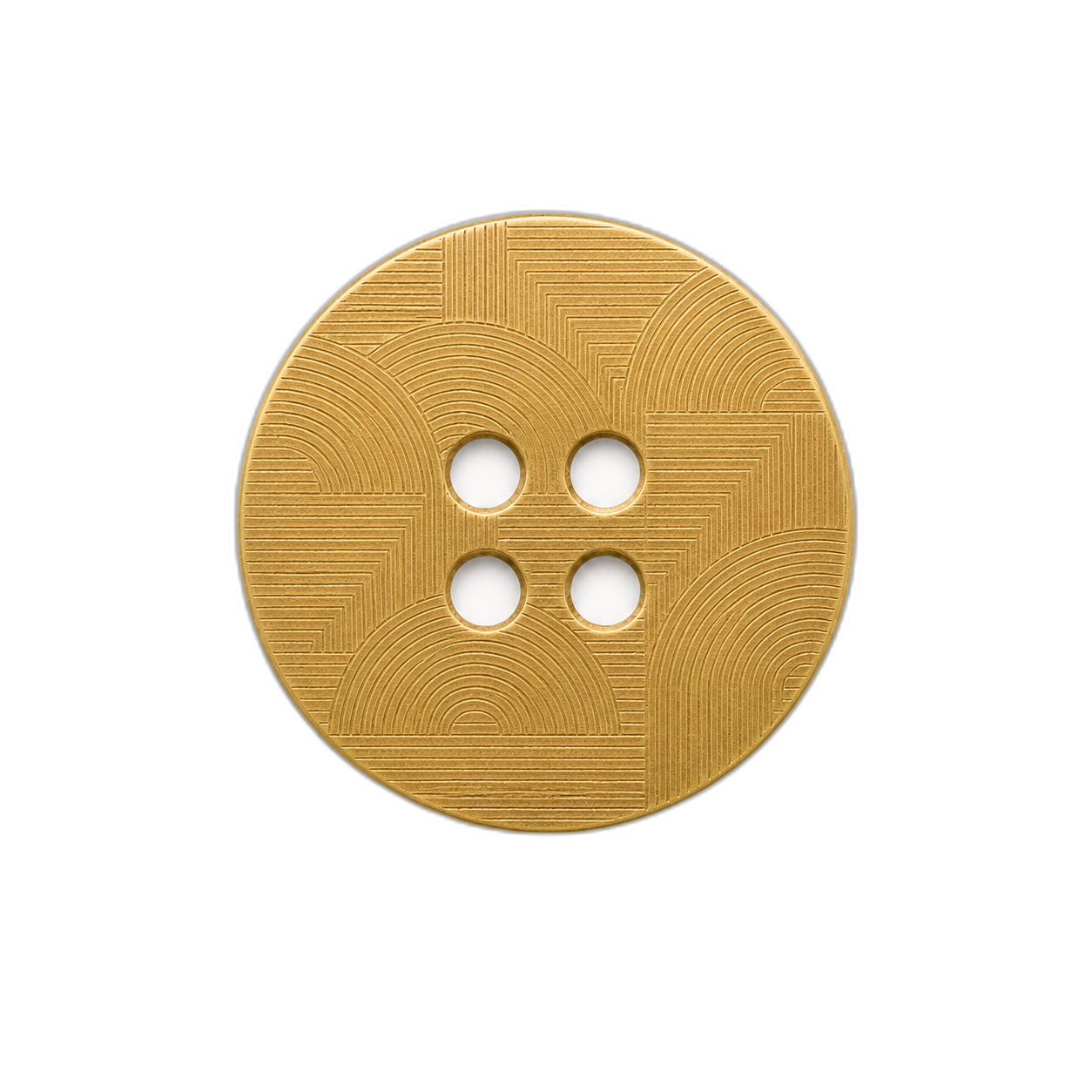
Laser Engraving
Precise line work for logos, text, and patterns. Works on all metals. No tooling cost for simple designs.
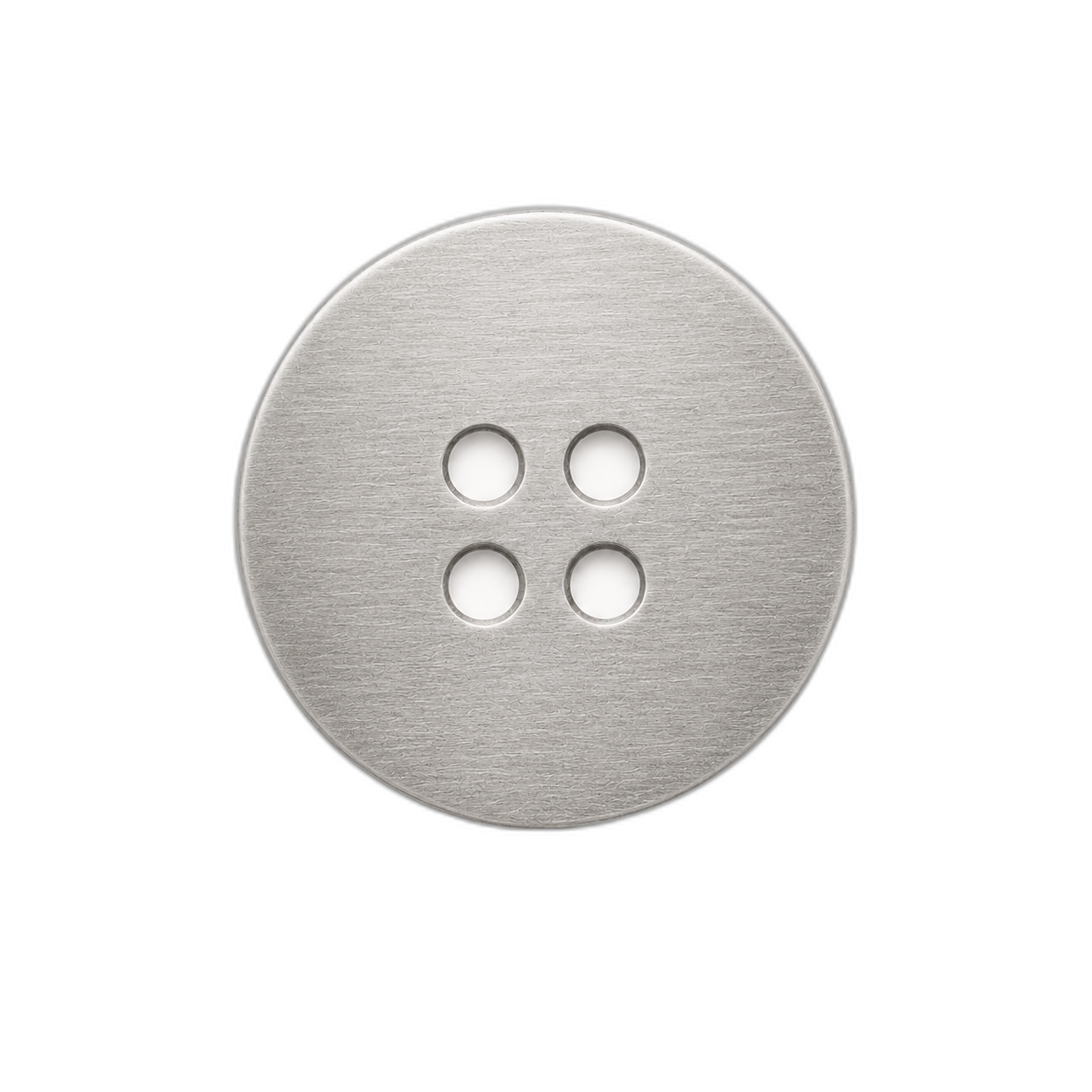
Brushed / Satin
Directional surface texture that reduces glare and adds tactile quality. Available on most metals and plating finishes.
Materials FAQ
The material and finish questions sourcing managers ask most often before requesting a sample.
Which metal should I choose: zinc alloy, brass, or stainless steel?
Zinc alloy is die-cast and holds complex 3D shapes and fine logo relief at the lowest per-piece cost, which makes it the default for buttons, badges, and decorative hardware. Brass is denser, takes engraving below 3mm cleanly, and resists corrosion better without plating. Stainless steel is not a die-casting alloy; depending on the design and the supplier, stainless parts may be stamped from sheet, metal-injection-molded, investment-cast or machined. It delivers the tensile strength and corrosion resistance needed for technical outdoor, workwear, and marine applications; for marine and high-salt exposure, specify grade 316.
What is the difference between electroplating and antique finishing?
Electroplating deposits a uniform metal layer such as gold, silver, nickel, gunmetal, rose gold, or chrome, in either high gloss or matte. Antique finishing adds a chemical aging step that darkens recessed areas while leaving raised surfaces bright, creating visual depth. Antique and matte finishes require a clear lacquer topcoat to stop continued oxidation once the patina is set.
Will the finish color match across production batches?
Noraforge holds color consistency to delta-E < 1.5 across a batch. This tolerance reduces the risk of the visible banding that appears when hardware from different plating runs is mixed on a single garment. Physical samples are approved before bulk plating begins, and the approved sample becomes the reference standard for the run.
Are your materials nickel-free and REACH compliant?
Nickel-free options are available; 304 and 316 stainless steel contain nickel and are low-nickel-release grades rather than nickel-free. Noraforge supplies lead-safe and phthalate-controlled hardware with documentation for OEKO-TEX Standard 100, REACH substance restrictions, and CPSIA. For parts in direct and prolonged skin contact, nickel release is tested to EN 1811, preceded by EN 12472 wear simulation for plated or lacquered parts. Specify the destination market at quotation so the correct test protocol is applied.
Can you match a physical sample or a Pantone reference?
Both. Send a physical sample, a photo, a logo file, or a tech pack callout with a Pantone or RAL reference. Matching from a physical sample is the most accurate route because it captures surface texture and gloss level, not only hue. Where a design draws on one of the 10,000+ existing mold references, tooling lead time is reduced.
Which materials are suitable for babywear and children's clothing?
Suitability depends on the finished part meeting the limits of the destination market. In the US, hardware on babywear and childrenswear designed primarily for children 12 and under must meet CPSIA: no more than 100 ppm total lead in any accessible component, plating included, and no more than 90 ppm lead in paint or similar coatings. CPSIA phthalate limits apply only where the garment is itself a toy or a child care article, such as sleepwear or a bib for ages 3 and under, and then cover accessible plastic parts such as plastic snaps. In the EU, REACH limits nickel release from parts in direct and prolonged skin contact and restricts lead in small accessible parts that children may place in the mouth, which ECHA guidance says can include buttons and other metal fastenings on clothing. Noraforge has existing baby-product and children's hardware experience and supplies the corresponding test documentation. Snap fasteners and studs in these categories also require pull-test verification for attachment security.
Ready to develop your custom hardware?
Send a reference image, sketch, or tech pack. We respond within 24 hours.
Request a Quote →